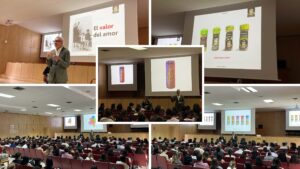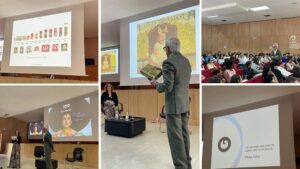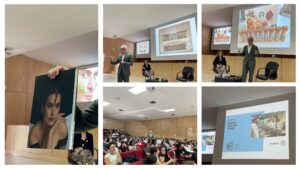




Jesús Navarro Alberola Shares the Keys to Carmencita’s Brand Value at FEET-ULPGC

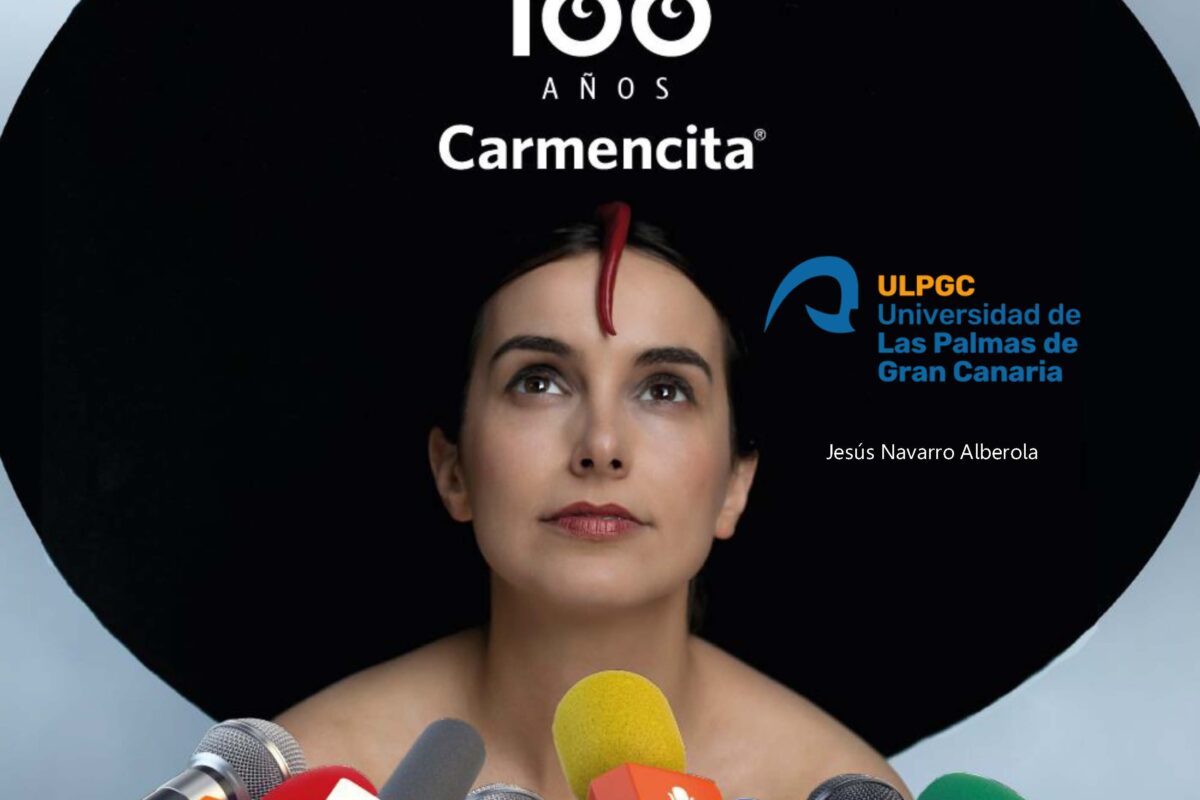
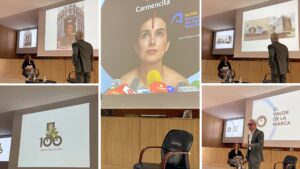
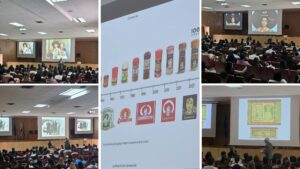
The Faculty of Economics, Business and Tourism (FEET) wishes to express its deepest and most sincere gratitude to Mr. Jesús Navarro Alberola, CEO of Jesús Navarro, S.A. (Carmencita), for his outstanding keynote lecture titled “The Value of the Brand.”

This session, held on 14 November 2025, offered a valuable learning opportunity of great academic and professional interest, highlighting the strategic importance of branding in building business value.
Mr. Jesús Navarro Alberola—regular speaker at corporate strategy forums and leader of the national market in spices and sweeteners—guided us through Carmencita’s century-long journey. He demonstrated how the company has created value through its brand by effectively combining tradition, innovation, and social purpose.

A central theme of the lecture was the connection between branding and ethical commitment, underscoring that actions supporting both the team and societyparticularly those aimed at the most vulnerable—add greater value to the brand.

We extend our profound thanks to Mr. Jesús Navarro, who is also president of Alicante Gastronómica Solidaria (an organisation that has prepared nearly two million meals for people in need since 2020), for sharing his career and his vision of corporate leadership. His perspective reminds us that a brand’s value is built on strategy, vision, and, fundamentally, love.
 

The ULPGC Social Council awards the finalists of the Economics Olympiad.

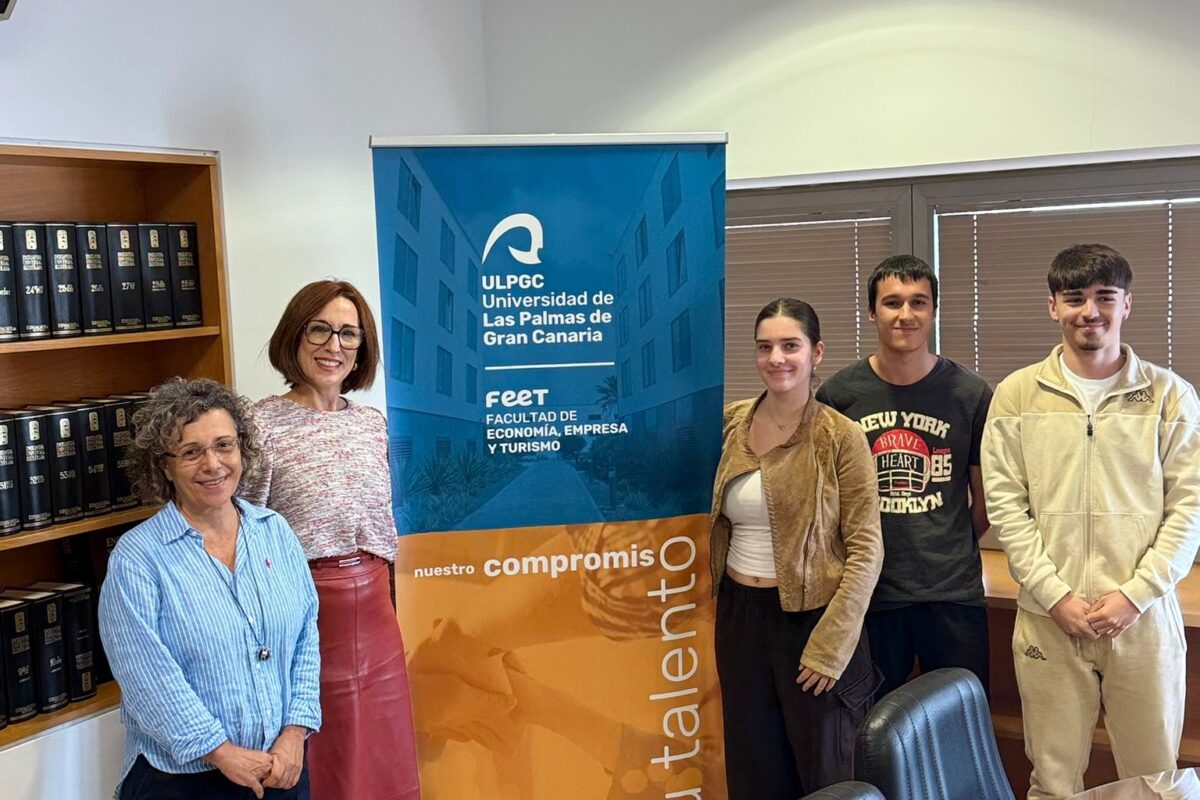
Last Tuesday, 22 November, the Social Council of the University of Las Palmas de Gran Canaria (ULPGC) presented the tablets awarded each year to the Economics Olympiad finalists, held last March. The event took place at the Dean’s Office of the Faculty of Economics, Business and Tourism (FEET).

The award recipients were Adrián Martínez Castro, from IES La Minilla (Las Palmas de Gran Canaria); José Carlos Marrero Castillo, from IES Támara (San Bartolomé de Tirajana); and Irene Lorenzo García, from IES Teror. All three students are currently pursuing their studies at the Faculty of Economics, Business and Tourism: Adrián and Irene are enrolled in the Double Degree in Business Administration and Management and Tourism. At the same time, José Carlos chose the Degree in Economics. Last June, the three students also took part in the national stage of the Olympiad, held at the University of Alicante, where they had the opportunity to share the experience with students from across the country.

The Social Council’s award was given to the finalists who chose to pursue their university studies at the ULPGC.

During the event, the teacher Mª Isabel Ortega Suárez, from IES Guanarteme, was also recognized for her contribution, as her group of students achieved the highest average score among all participating schools.

The awards ceremony was attended by the Dean of the Faculty, Mª Victoria Ruiz Mallorquí, and the Secretary of the Social Council, Miguel Ángel Acosta, who highlighted the high quality of the University and the commitment of its teaching staff and students. Acosta also expressed his gratitude to the Faculty and the secondary schools for their participation in initiatives such as this one.

Finally, the Vice-Dean for Students, Digital Communication and Culture announced that the 2026 edition of the Economics Olympiad will be launched soon.

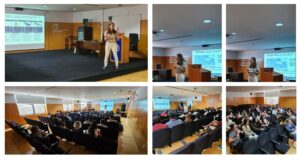
Artificial Intelligence and Sustainability: Are They Compatible?

Last Friday, November 7th, the Lecture Hall at the Faculty of Economics, Business and Tourism (FEET) hosted the lecture “Artificial Intelligence and Sustainability: Are They Compatible?”, delivered by Julia Martínez Cabrera, PhD candidate in Circular Economy at the faculty. Martínez Cabrera holds a Master’s degree from HEC Paris in Sustainability and Social Innovation, where she also teaches as a visiting lecturer, is the academic director of the Circular Tourism programme at ULPGC, an external consultant for the United Nations Economic Commission for Europe (UNECE), and a member of the non-profit
organisation Circular Munich (Germany).

During her talk, she reflected on the enormous potential of artificial intelligence (AI) to accelerate the Sustainable Development Goals, while also addressing the environmental impacts associated with its use: energy, water, and material consumption, as well as the growing carbon footprint of data centres, which already account for around 1.5% of global electricity demand.

The speaker stressed the importance of encouraging responsible use of generative AI — such as ChatGPT — noting that each digital interaction has a measurable environmental impact. In this regard, she presented tools such as comparIA (developed by the French Government), which enable assessing and comparing the ecological footprints of different generative AI models, illustrating how larger models — although more powerful — are also more energy-intensive and have a higher carbon footprint.

Towards the end of the lecture, Martínez Cabrera encouraged students to “choose the right amount of intelligence” for each task, prioritising technological solutions with a lower impact. In the subsequent practical workshop, participants applied this criterion by selecting appropriate AI models based on the problem type.

The FEET would like to thank Julia Martínez Cabrera for this inspiring session, which helped students gain a deeper understanding of how to balance technological innovation and sustainability, and how to incorporate responsibility criteria into the use of AI.


Business Administration students explore the Canary Islands’ Economic and Fiscal Regime in a seminar organized with the Official Association of Economists of Las Palmas.

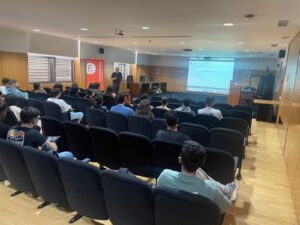
On November 7, fourth-year students of the Bachelor’s Degree in Business Administration took part in a training session on the Canary Islands’ Economic and Fiscal Regime (REF), as part of the course Business Tax System. The seminar was delivered by Professor Jorge Juan Guerrero Arroyo and organized in collaboration with the Official Association of Economists of Las Palmas.

The activity was part of the Training Program on the REF promoted by the Government of the Canary Islands—through the Department of Finance and Relations with the European Union and the Office of the REF Commissioner—aimed at raising awareness of the mechanisms provided by the Canary Islands’ special fiscal framework to offset the additional costs of insularity and to strengthen business competitiveness.

During the session, Professor Guerrero provided a clear and practical overview of the primary measures included in the REF and discussed how they can be applied to the everyday management and fiscal planning of businesses.

Facultad de Economía, Empresa y Turismo de la ULPGC
Privacy Overview

This website uses cookies so that we can provide you with the best user experience possible. Cookie information is stored in your browser and performs functions such as recognising you when you return to our website and helping our team to understand which sections of the website you find most interesting and useful.